
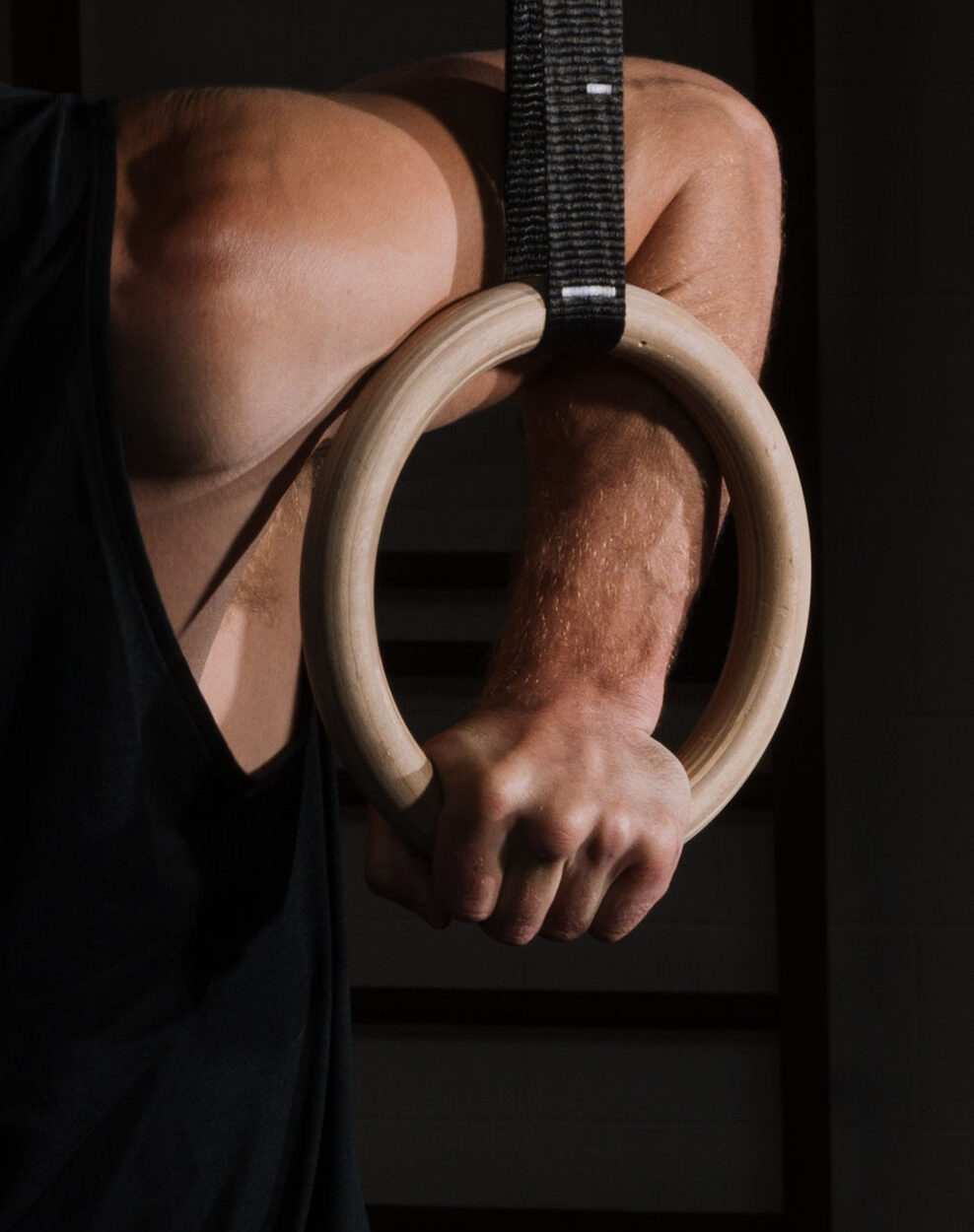
If you’ve done a dead hang at Klae, you know the feeling: the spinal decompression, the shoulder opening, the quiet challenge of holding on. But the grip you’re building in those moments? It may be telling us something far more significant about your long-term health than you’d expect.
Research suggests that how strongly we can grip provides valuable insight into our overall health, physical function, and how well we are likely to age.
Grip strength itself is not a secret to longevity. Think of it instead as a marker for your body’s physical capacity, a window into how well your whole system is functioning.
At Klae, we train grip strength both purposefully and incidentally. It shows up in dead hangs and pulling variations, in the way we reach for a dumbbell rather than a cable machine, in carries and kettlebell work. That isn’t accidental. We choose free weights over machines because they demand what machines don’t: grip, stability, and real neuromuscular engagement. The closer your training mirrors real life, the more capable your body becomes of actually living it.
More than just a strong handshake
Researchers and health professionals often use grip strength as a simple measure of overall muscular strength and function.
It’s a biomarker of ageing and a practical way to understand how the body is functioning as we move through later stages of life. And it’s useful in the shorter term too: a meaningful drop in grip strength, particularly 10% or more, can signal poor recovery or fatigue, suggesting that a recovery session, a walk, or something lower in intensity may serve you better than a heavy training day.
What the research consistently shows is that lower grip strength is associated with a range of poorer health outcomes in older adults: reduced physical function, increased disability, greater risk of falls and fractures, longer hospital stays, and higher rates of mortality.
That’s a significant list. But the reason grip strength carries so much weight as a marker is that it reflects something broader: the overall strength, function, and resilience of the body as a whole.
What does that look like in real life?
In talking with our members, for many of them healthy ageing isn’t about chasing athletic performance or looking a certain way.
Their priorities are more grounded than that. Lifting a suitcase into the overhead locker before a long-awaited holiday. Carrying shopping without hesitation. Playing with and picking up grandchildren. Feeling confident navigating unfamiliar places, busy airports, and active adventures.
Recently, one of our members returned from Thailand after stepping well outside her comfort zone and participating in a flying trapeze experience. What makes this story so memorable is the confidence she felt in her body to try it. Her shoulder strength, mobility, coordination, and grip required to hold on and participate had not appeared overnight. They had been gradually developed through consistent training over months.
Moments like these remind us that the true value of strength is not found in the gym. It is found in the strength that allows us to experience beyond it.
Strength and capability are closely connected
One of the clearest themes in the research is the relationship between grip strength and the ability to function independently. As grip strength declines, so too can the capacity to manage everyday activities without assistance, with researchers finding consistent associations between lower grip strength, reduced mobility, and a greater risk of disability.
This is where the conversation shifts from ageing to quality of life. Longevity isn’t solely about living longer. It’s about maintaining the ability to keep doing the things that bring meaning, enjoyment, and connection to life.
The ability to move confidently matters.
The ability to trust your body matters.
The ability to remain capable matters.
At Klae, we often talk about building a body that supports the life you want to live. This is one of the reasons strength training sits at the heart of our Sculpt pillar.
When we strength train, we are investing in the systems that support movement, function, and independence over time. And our Thrive sessions develop the movement capability, coordination, confidence, and adaptability that become increasingly valuable as we age and continue exploring what our bodies can do.
A simple question worth asking
Is there something you’ve stopped doing — or started quietly avoiding — because you weren’t sure your body would follow?
Questions like this can seem small, but they often reveal something important about how we feel within our bodies. Ultimately, strength is about the freedom and confidence that comes from knowing we can.
Looking ahead
As part of our upcoming Winter Commitment, beginning July 13th, we will be introducing a number of baseline assessments to help members better understand and track their progress over the six-week journey.
Among these will be grip strength and dead hang capacity.
These measures offer valuable insight into strength, function, and overall physical capability, and they give us an opportunity to celebrate progress that extends well beyond appearance or performance.
Expressions of interest for the Winter Commitment are now open.